(1873 – 1954)
ART ::: ILLUSTRATOR :::

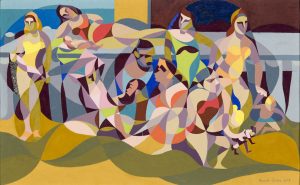
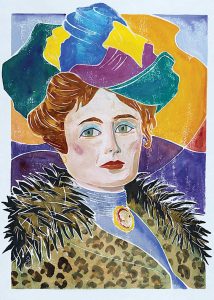
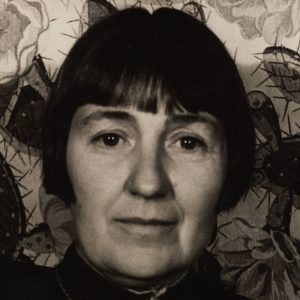
Maud Hunt Squire was born in Cincinnati in 1873, a city that quietly incubated radical talent at the turn of the twentieth century. Trained at the Cincinnati Art Academy, she developed a distinctive visual language that rejected academic stiffness in favor of intimacy, pattern, and psychological presence. Cincinnati gave her technical grounding, but it also gave her constraint—and like many queer artists of her era, she would eventually seek a wider, freer orbit where identity and art could breathe together.
That orbit became Provincetown. By the 1910s, Provincetown was a crucible for modernism, queerness, and experiment, and Squire—alongside her lifelong partner Ethel Mars—fit naturally into its bohemian ecology. Their work circulated through the same radical channels as the Provincetown Players, modernist writers, and visual artists who treated the town as both refuge and laboratory. Provincetown wasn’t just a backdrop; it was a permission slip. Here, art could be domestic, collaborative, and defiantly outside the straight lines of American respectability.
Out of that shared life came Miss Furr and Miss Skeene, Gertrude Stein’s quietly explosive 1922 portrait of a couple who “were very regularly gay.” Though Stein never named them outright, Squire and Mars are widely understood as the inspiration—two women living openly, working together, and refusing tragedy as the price of visibility. In Stein’s hands, they became literary myth; in their own, they became proof. Long before the language existed, Maud Hunt Squire and Ethel Mars showed that queer life could be sustained, creative, and—most dangerously of all—ordinary.